

*Astronomia da fantascienza, a cura di Camilla Pianta*
A Fire Upon The Deep, quando l’ordine cosmico è dinamico 🌌
What if universal constants were actually variables?
COUNTDOWN TO APRIL 2026, THE CENTENARY OF SCIENCE FICTION: -1
 Clicca qui per la versione italiana di questo articolo
Famous for coining the term “technological singularity” and for anticipating current scientific debates on artificial intelligence, Vernor Vinge (1944-2024) was an American writer with an academic background in mathematics and computer science. In the novel A Fire Upon The Deep, first released in 1992 by the American publisher Tor Books and then the following year in Italy by the publisher Editrice Nord, in a translation by Gianluigi Zuddas (1943), the galaxy is a heterogeneous, vertically stratified environment. It is, in fact, divided into Zones with spatially varying physical properties, whose complexity increases with height above the galactic plane. From the Unthinking Depths, through the Slow Zone, and all the way to the Beyond and the Transcend, the constraints on communication and technology become ever less restrictive, ultimately allowing information to propagate at superluminal speeds within the Known Net. The planet Central constitutes a strategic node inside the Net: positioned to maximise data transmission and accelerate interstellar travel, it grants access to regions that would otherwise remain unreachable. In 1993, the work won the Hugo Award for Best Science Fiction Novel.
It is an inconstant universe, the one imagined by Vinge, where the behaviour of physical laws shifts from Zone to Zone. How, then, does this inconstancy unfold in our own universe?

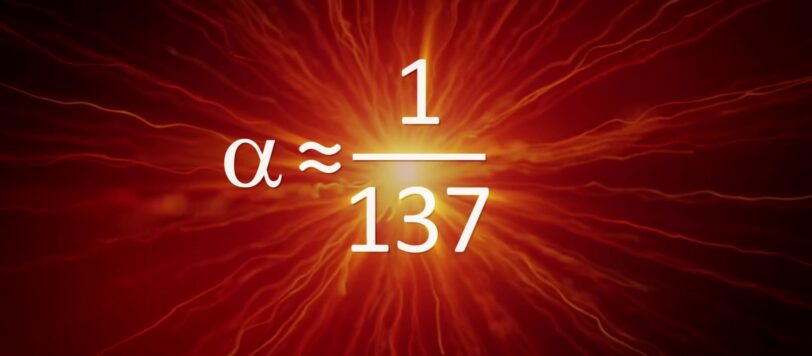
It is said that the Austrian physicist Wolfgang Pauli (1900-1958) claimed that, once dead, his first question to the Devil would have been what its meaning was, and that the US physicist Richard Feynman (1918-1988) described it as “a magic number that comes to us with no understanding by man”. We are talking about the fine-structure constant, a dimensionless quantity with value of α ≈ 1/137.036, regardless of the system of measurement. According to recent studies, a variation of just a few percent in this number would be sufficient to preclude the existence of life in its known forms. It is for this reason that some have even argued that the fine-structure constant has been deliberately “tuned” to be compatible with the emergence of life. Nevertheless, it cannot be predicted directly from theory, but must be measured experimentally. Indeed, it appears among the 19 free parameters of the Standard Model of particle physics (we have written about that in another episode of this series) and belongs to the class of coupling constants, which determine the strength of the electromagnetic, weak nuclear, and strong nuclear interactions. Specifically, is the coupling constant associated with the electromagnetic force, since it gives the strength of the interaction between two charged particles — such as proton–electron interactions in atoms and proton–proton interactions in atomic nuclei, where it manifests as Coulomb repulsion between positive charges (that is, charges of the same sign).
The α constant was first introduced in 1916 by the German phyisicist Arnold Sommerfeld (1868-1951), who extended the atomic model of the Danish physicist Niels Bohr (1885-1962) by incorporating relativistic corrections to electronic orbits. In Bohr’s model, negatively charged electrons revolved around a positively charged nucleus composed of protons and neutrons, occupying fixed (i.e., quantised) energy levels called orbitals. Electrons could jump from one orbital to another by absorbing a given quantity of energy in the form of photons (to move up) or by emitting it (to move down). Bohr’s model, however, eventually revealed itself to be overly simplistic, for it failed to consider electron spin, which led to an additional splitting of the orbitals into two distinct levels, marked by a slight energy separation. It was Sommerfeld himself who identified the presence of these sub-orbitals, constituting the fine structure of the atom: hence the name of the constant, which had to mathematically reproduce it.
The measurement of α is achieved through atomic spectroscopy and interferometry experiments, enabling observation of the electron’s behaviour when subjected to an external magnetic field (as occurs in cyclotrons). This response, referred to as the magnetic moment, depends on the particle’s spin and electric charge: the small deviations between the empirical value and the theoretical value derived from the British physicist Paul Dirac’s (1902-1984) relativistic equation for the electron are termed anomalies of the magnetic moment and serve to accurately calculate in quantum electrodynamics. From a physical perspective, the low magnitude of implies that the electromagnetic force is rather weak, causing electrons to orbit the nucleus at relatively large distances and making them less tightly bound. The electrons’ greater availability to exchange with other atoms thus facilitates the chemical reactions essential for life to develop. Should be significantly increased or decreased, the necessary conditions for these chemical reactions would not be established, and life would not be possible. In other words, falls precisely within the Goldilocks zone, the critical window beyond which the universe could not sustain the stable configurations required for biological complexity.

Evidence of the connection between and the chemistry of life is also found in astrophysics, owing to the work of the British astronomer Fred Hoyle (1915-2001) on the production of heavy elements — such as carbon, nitrogen, and oxygen — in stellar interiors. In 1957, he discovered that the cosmic abundance of carbon could be accounted for only if the carbon-12 nucleus possessed an excited state at the energy of 7.654 MeV (the Hoyle state). This was a resonant state, its energy closely coinciding with that necessary for three helium nuclei to merge in the triple-alpha reaction by which carbon-12 is formed. It therefore seemed, essentially, to be “finely positioned” to enhance the likelihood of the triple-alpha reaction taking place. Starting from the early 2000s, nuclear structure and stellar evolution models have been employed to investigate the sensitivity of the triple-alpha reaction to the position of the Hoyle state in carbon-12. The aim was to estimate the influence of the strong nuclear and electromagnetic forces on the energy threshold at which the reaction could be considered efficient. In particular, research by the Austrian physicist Heinz Oberhummer (1941-2015) and his collaborators showed that a variation of about 0.5–4% in the value of would suffice to shift the resonance, thereby drastically modifying carbon nucleosynthesis. The alteration of would, in fact, translate into a different Coulomb repulsion between the protons of carbon-12 nuclei, disrupting the balance with the strong nuclear force — responsible for holding protons and neutrons together in atomic nuclei. The absence of equilibrium in the two forces would consequently prevent the energy of the reacting helium nuclei from matching that of the carbon nuclei produced.
At first, the fine-structure constant thusly gave the impression of being a universal and immutable quantity. Awareness that it is actually related to temperature grew alongside quantum electrodynamics: it takes the value α ≈ 1/137.036 at T ≈ 2 K, the temperature of the present universe, but rises to α ≳ 1/127 at T ≈ 1015 K, the temperature of the primordial universe. Hence, was heightened near the Big Bang, when the universe was extremely hot, implying that it can be regarded as constant solely within the low-temperature regime. The energy-scale dependence of coupling constants — expressed in terms of temperature as a measure of average energy in particle physics — is known as the running of the constants and follows from the implementation of the renormalisation technique in quantum electrodynamics.
This is a mathematical procedure to eliminate divergences in the theory’s equations, which rewrites fundamental parameters (such as the electron’s charge and mass) in finite form by replacing calculated values with those obtained from experiment. In this way, one can extract consistent numerical predictions, testable against observations, as a function of the energy scale characterising the physical system under study. Notably, divergent contributions have their origin in quantum vacuum fluctuations, a phenomenon whereby empty space is assumed to be populated by virtual particle–antiparticle pairs (that is, not directly observable) that continuously materialise and annihilate. Although invisible and very short-lived, they perturb the electric field of real particles, reducing its intensity as detected at a distance.

When, for instance, a real electron (which carries negative charge) is immersed in the vacuum, the virtual particles (suppose electron–positron pairs) respond to its field and redistribute as dictated by the sign of their charge: oppositely charged ones (the virtual positrons) are attracted and migrate closer, while like-charged ones (the virtual electrons) are repelled and move further away. This vacuum polarisation has the effect of surrounding the real particle with a cloud of virtual particles, which partially screens its charge and weakens its electric field. At low energies (or temperatures), the screening is maximal, so that the effective charge — actually measured — descends below the “bare” charge and the electromagnetic interaction is attenuated. Now, the temperature T ≈ 2 K corresponds to energies of the order of 10-4 eV, which are too low for electromagnetic interactions to penetrate into the innermost region of the cloud shielding real particles. Ergo, in the case of the present universe, to enter the computation of α is the screened charge instead of the actual one.
Yet, α is by no means unique as an “inconstant constant”, for every constant governing the fundamental interactions (αs for the strong, αw for the weak, and G for the gravitational force) is indeed sensitive to the energy scale. This prompts the question: what does the word “constant” truly signify in physics?
Historically, a constant denoted an absolute number that underpins the pursuit of the universality of physical laws, presumed to hold at every point in space and at every instant in time. By contrast, modern physics reveals a dynamic cosmos, where the notion of constancy bends and reshapes to mirror its evolving state. Like in A Fire Upon The Deep, constancy frequently stands as a synonym for local and contingent stability. The precariousness inherent in the physical meaning of constancy need not be alarming, though: it simply suggests that reality is not rigidly deterministic, and that the universe we inhabit is merely one possible configuration among many. Would it be so wrong to envision alternative scenarios, even with a touch of science fiction? The answer is for you, the reader, to decide.
Nus, 3 March 2026 – English version published on 18 June 2026
Astroglossary
temperature of the universe T: the temperature of the Cosmic Microwave Background (CMB), the fossil electromagnetic radiation field that uniformly permeates the universe and represents the light emitted at the recombination epoch (that is, when matter and radiation decoupled, approximately 380,000 years after the Big Bang). It is composed of photons that have propagated freely through space ever since, their wavelengths being gradually stretched into the microwave range by cosmic expansion. This phenomenon, known as cosmological redshift, reduces the photons’ energy (inversely proportional to their wavelength) and lowers the CMB temperature.
electron spin: an intrinsic property of the electron, indicating its orientation relative to an external magnetic field. It is a quantised quantity that can take only two distinct values, “up” and “down.”
polarisation: the redistribution of electric charges in response to an external electric field, resulting in regions of positive and negative charge.
particle–antiparticle pairs: a temporary association of a particle and its corresponding antiparticle, possessing identical mass but opposite electric charge.
fundamental interactions: the four basic forces that govern all physical phenomena in the universe, determining how elementary particles interact. These are the gravitational, electromagnetic, strong nuclear, and weak nuclear forces.
Standard Model of elementary particles: the physical theory, developed between the late 1960s and 1970s, that describes the constituents of matter and the fundamental interactions, excluding gravity.
Quantum electrodynamics (QED): the theory of the interaction between charged particles and the electromagnetic field, combining the principles of quantum mechanics and special relativity. It accounts for the emission and absorption of photons, which mediate the electromagnetic interaction, and for the effects of quantum vacuum fluctuations, which give rise to the formation of virtual particle–antiparticle pairs.
stellar nucleosynthesis: the process through which chemical elements heavier than hydrogen are produced within stars by nuclear fusion reactions. During successive fusion cycles, the synthesised elements are progressively mixed and transported towards the outer stellar layers. There they are eventually expelled into the surrounding interstellar medium via stellar winds or supernova explosions, supplying new material for the formation of stars, planets, and ultimately life.
fine-tuning: the condition in which the fundamental parameters of a theory or of the universe must take extremely precise values for the observed physical phenomena to occur.
References
Internet Speculative Fiction Database: Vernor Vinge, A Fire Upon The Deep, every edition
Giovanni De Matteo, “Universo incostante”, Fantascienza.com, 3 July 2007, in Italian
Arnold Sommerfeld, “Zur Quantentheorie der Spektrallinien”, Annalen der Physik, vol. 356, issue 17, pp.1-94, 1° January 1916, in German
Heinz Oberhummer, Attila Csótó, Helmut Schlattl “Fine-tuning carbon-based life in the universe by the triple-alpha process in red giants”, in V. Burdyuzha, G. Khozin (Eds.), “The Future of the Universe and the Future of our Civilization” Conference (July 2-6, 1999, Budapest, Hungary), pp. 197-205, World Scientific Publishing, 2000 – arxiv version without paywall
Ethan Siegel, “Ask Ethan: What Is The Fine Structure Constant And Why Does It Matter?”, Forbes, 25 May 2019
Maura Sandri, “E se l’universo avesse un nord e un sud?”, Media INAF, 29 April 2020, in Italian
Natalie Wolchover, “Physicists Nail Down the ‘Magic Number’ That Shapes the Universe”, Quanta Magazine, 2 December 2020
Molly Templeton, “Vernor Vinge, 1944—2024”, Reactor, 22 March 2024
Steve Holland, “Vernor Vinge Obituary”, The Guardian, 29 March 2024
Chary, Mark “Exploring the Habitability Goldilocks Zone: The Delicate Balance for Life”, Journal of Astrobiology & Outreach, vol. 13, issue 2, no. 374, 29 January 2025
👉 Click here for other articles of the series Sci-fi Astronomy, edited by Camilla Pianta
