

*Sci-fi Astronomy, edited by Camilla Pianta*
Solaris, an inquiry into extraterrestrial life through the lens of science fiction
👽
What if searching for alien life helps us understand ourselves?
COUNTDOWN TO APRIL 2026, THE CENTENARY OF SCIENCE FICTION: -5
 Clicca qui per la versione italiana di questo articolo
“The discovery of Solaris dated from about 100 years before I was born. The planet orbits two suns: a red sun and a blue sun. For 45 years after its discovery, no spacecraft had visited Solaris. At that time, the Gamow-Shapley theory—that life was impossible on planets which are satellites of two solar bodies—was firmly believed. The orbit is constantly being modified by variations in the gravitational pull in the course of its revolutions around the two suns. […] A few decades later, however, observations seemed to suggest that the planet’s orbit was in no way subject to the expected variations: it was stable, as stable as the orbit of the planets in our own solar system.”
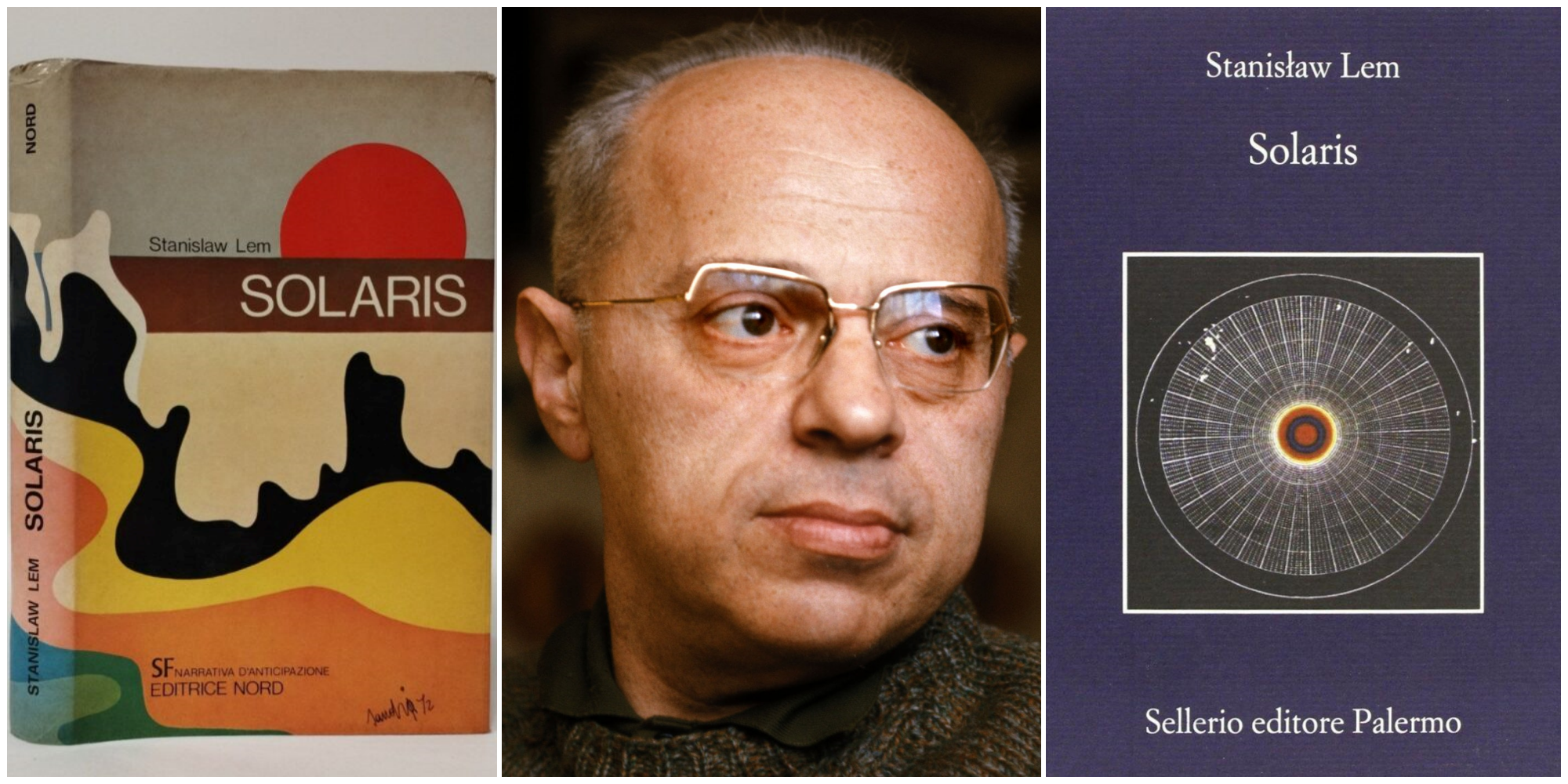
Published in 1961, Solaris is nowadays acknowledged as one of the most important science fiction novels ever written, and arguably the most significant of the genre authored by a continental European — the Polish Stanisław Lem (1921–2005) — in the past century. The story follows astronaut Chris Kelvin, who is dispatched to a space station orbiting the planet Solaris, located in the constellation of Aquarius. He is neither a physicist, nor an engineer, nor an astronomer, as one might expect: he is a psychologist. Indeed, the task of investigating this mysterious world tests the Earthly explorers not merely on a scientific level, but, above all, on a human one. Solaris is almost utterly covered by a gelatinous ocean in perpetual motion, whose properties are so inexplicable as to suggest a formless sentient intelligence capable of influencing its surroundings. Some believe that this influence governs the planet’s remarkably stable orbit around its two suns, a trajectory that, according to the laws of gravity, ought not to be admissible. Other equally anomalous phenomena are likewise attributed to the ocean, including disturbances of the minds of those aboard the station, as for instance the materialisation of figures from their past — faithful recreations of the dead or long forgotten. Sent to uncover the nature of the events occurring on the station, Kelvin soon finds himself unprepared for what he encounters: his confrontation with Solaris radically transforms not only his understanding of life, but also his perception of himself.
When Lem devised Solaris, he could not have foreseen that, just three decades later, beginning in the 1990s, astronomical research would confirm the existence of the alien worlds long imagined by science fiction. These worlds are known as exoplanets, the technical term used to designate planets beyond the Solar System. Although none of the more than 6,000 exoplanets discovered to date harbour an entity as unfathomable as Solaris’ ocean, the observed physical properties are so diverse and peculiar that they compel reviewing theoretical models for planetary formation and evolution. Much like Kelvin, in reality too, these alien worlds continue to astonish us…
Giuseppe Galletta, professor of astronomy and astrobiology at the University of Padua, provides a scientific perspective on the alien worlds envisioned by Lem. His research concentrates on the study of exoplanets and the conditions that could render them habitable. Astrobiology — a discipline at the intersection of astronomy, geology, chemistry, and biology — addresses these exact questions: how planets form, what chemical elements they contain, and how they might sustain life.
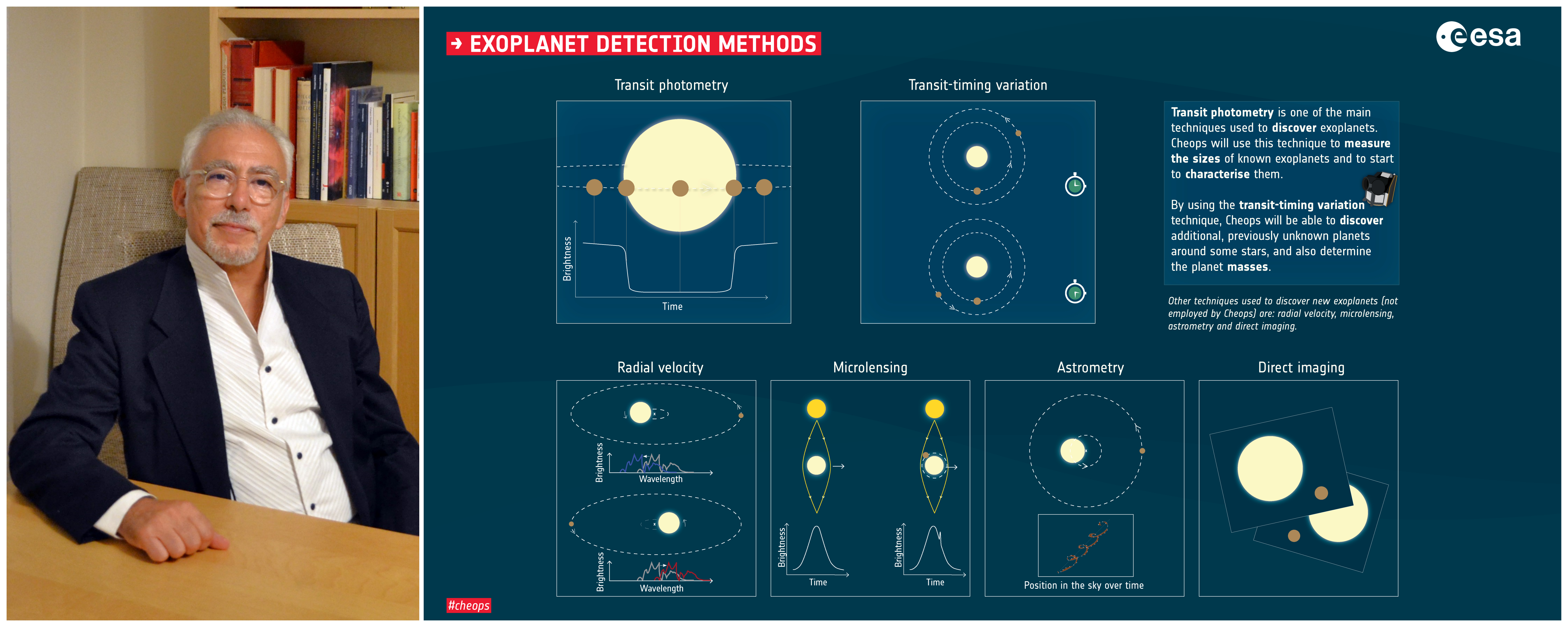
“There are several techniques that enable us to determine the presence of an exoplanet, derive its fundamental physical properties — such as mass, radius, density, atmospheric composition, and orbital period — and evaluate its potential habitability. Among these, we mention four in particular: the radial velocity method, the transit method, direct imaging, and gravitational microlensing,” Galletta explains. The radial velocity method involves measuring the tiny variations in the speed at which a star moves along the observer’s line of sight, caused by the gravitational pull of an orbiting planet. This oscillatory motion produced a Doppler shift in the spectral lines of the star’s light: as the star approaches, the lines shift towards the blue (shorter wavelengths); instead, if it recedes, they shift towards the red. Since the magnitude of this effect depends on the inclination of the orbit relative to the line of sight, it is possible to infer the planet’s minimum mass. On the other hand, the transit method tracks the drop in a star’s brightness when a planet passes across its visible disc, partially obscuring it. The depth and duration of the transit provide an estimate of the planet’s radius: when combined with the mass obtained through the radial velocity method, this yields its average density, a key parameter for distinguishing between gaseous and rocky planets.
Direct imaging is a more recent and complex approach, which aims to separate the light from the planet from the much more intense light from the nearby star. Once isolated, the radiation emitted or reflected by the planet can be observed directly and analysed using high-resolution spectroscopy to ascertain its atmospheric chemical composition, albedo and surface temperature. Finally, gravitational microlensing — a phenomenon predicted by Albert Einstein‘s general relativity in which the light from a distant star is deflected and amplified by the presence of a massive body along the line of sight — allows astronomers to discover small-mass planets that would otherwise escape detection by the radial velocity or transit methods. When a planet and its host star pass in front of a background star, the light from the latter experiences a temporary brightening (better called magnification), whose shape is a function of the planet’s mass.
By integrating these detection techniques, exoplanets can be classified according to their internal composition. Rocky planets, like Earth, possess dense cores and solid crusts, while gas giants, like Jupiter and Saturn, feature vast hydrogen and helium envelopes enclosing reduced-size rocky or metallic cores. Between these extremes lie super-Earths and mini-Neptunes: the former are planets more massive than Earth but smaller than Neptune, with surface gravity sufficient to retain a substantial atmosphere and maintain liquid water on a large scale, whereas the latter have dense atmospheres rich in volatile gases.
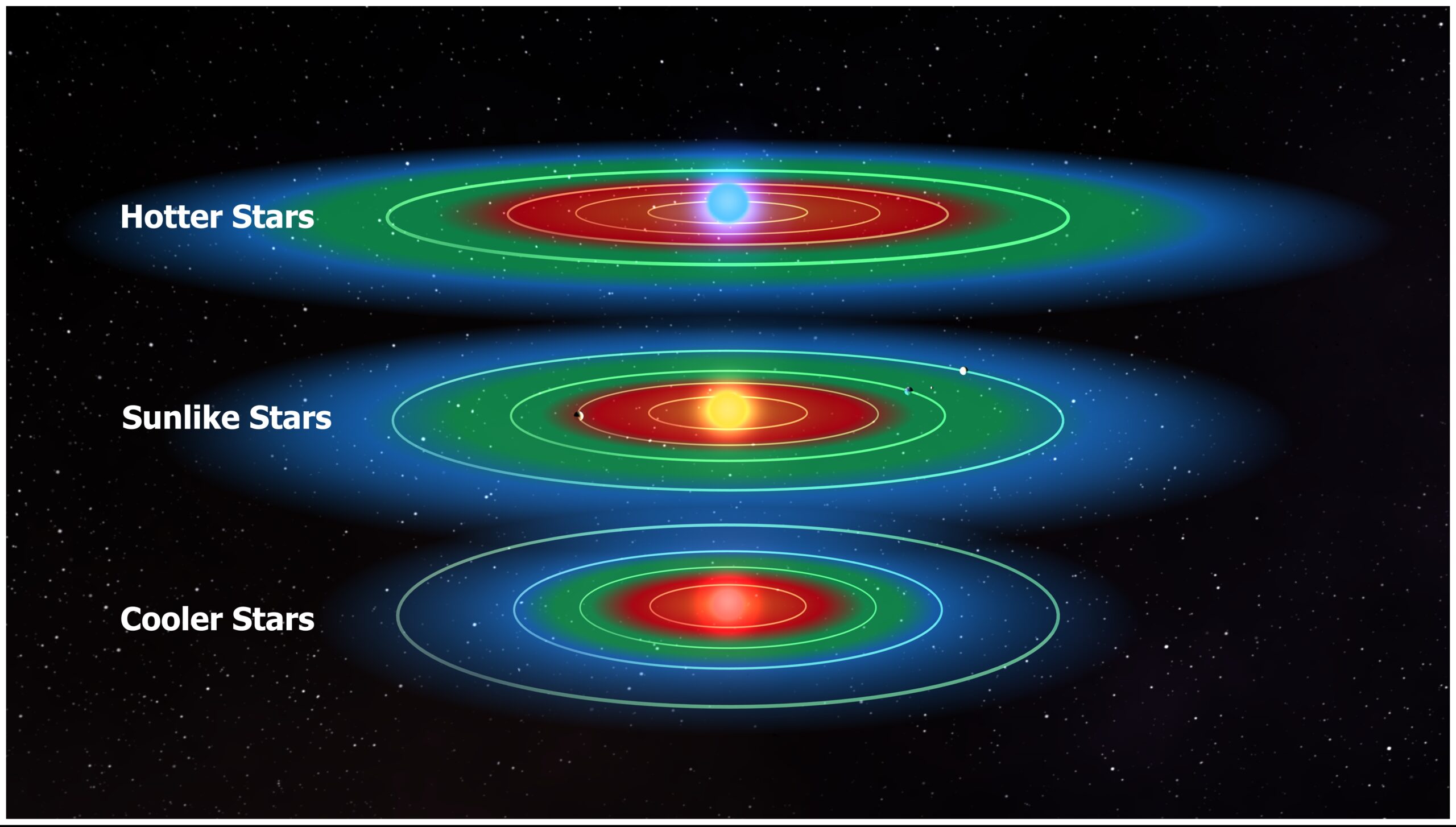
This classification is not an end in itself, though: rather, it serves as a tool to assess whether an exoplanet could be habitable — that is, whether it might support complex life, at least of a cellular type, similar to the Earth’s. “The factors that defines the habitability of an exoplanet are the following: its distance from the host star, the orbital stability and dynamics of the planetary system, atmospheric thickness, the presence of a liquid solvent like water, geological activity and geochemical recycling — which preserve the chemical elements indispensable for life —, the existence and duration of a magnetic field shielding the planet from stellar radiation, and a time window suitable for the emergence and survival of microorganisms,” Galletta elaborates. A planet’s distance from its star dictates the energy it receives, and consequently its surface temperature and the physical state of any water present. If the planet is too close, it is exposed to ionising stellar radiation, responsible for the loss of volatile atmospheric gases, while if it is too far, it freezes, with water turning to ice. The range of distances that theoretically allows an exoplanet to support liquid water on its surface in a stable manner identifies the so-called circumstellar habitable zone.
For this reason, the position of the habitable zone hinges on both the brightness and evolutionary stage of the star and the planet’s atmosphere, which can expand or shrink it through albedo and the greenhouse effect. For example, a main-sequence star such as the Sun radiates energy at an almost constant rate for billions of years, thereby stabilising the habitable zones of its planets. By contrast, a red giant star, which is larger and more luminous, shifts the habitable zone to greater distances, causing previously temperate planets to become inhospitable. Finally, a red dwarf star, having very low luminosity, confines the habitable zone to regions close to the star, where planets may undergo tidal locking and be thus irradiated on a single hemisphere.
However, it is not sufficient for a planet to reside within the habitable zone: its orbit must also remain stable over time to safeguard climatic equilibrium. Large variations in eccentricity, due to gravitational perturbations from neighbouring planets or companion stars, can create thermal gradients that temporarily evaporate or freeze water; a variable inclination of the planet’s rotational axis can trigger abrupt seasonal shifts; and orbital resonances, resulting from interactions with moons or other nearby planets, can alter the distribution of volatile gases in the atmosphere. The implication is that the likelihood of developing an environment suited to the onset of biological life is higher in orderly planetary systems (those not subject to strong gravitational perturbations or frequent climatic disturbances). In addition, a moderately dense atmosphere guarantees pressure and temperature values compatible with the persistence of liquid water and acts as a barrier against ionising stellar radiation reaching the surface. An atmosphere that is too thin, as on Mars, promotes heat loss and the evaporation of liquids — of which only traces remain today in the form of riverbeds or ancient ocean basins; one that is too thick, as on Venus, leads to extreme temperatures, the planet being perpetually shrouded by an impenetrable blanket of clouds and aerosols. A planet’s capacity to retain its original atmosphere is mainly linked to the existence of a magnetic field generated by its dynamo. The magnetic field plays a key role in deflecting charged particles from the stellar wind, engendering a protective shield around the planet — the magnetosphere —, such to secure the thermal and chemical conditions necessary for the survival of organic molecules.
Specifically, certain macromolecules are pivotal for Earth-like life: proteins, which serve as enzymes and structural supports, and nitrogenous bases, the chemical building blocks of nucleic acids, which encode and transmit biological information. The formation, assembly, and functioning of these polymer chains demand the presence of a liquid solvent on the planetary surface. This chain of processes is sustained by the planet’s geological activity, which recycles carbon, nitrogen, phosphorus, and other vital nutrients, thereby preventing the depletion of the chemical resources that constitute organic molecules. Phenomena such as plate tectonics, volcanism and heat exchange between the planet’s core and mantle regulate climatic equilibrium through long-term cycles, fostering biological evolution over timescales of millions or billions of years. In particular, the carbonate–silicate cycle modulates the atmospheric concentration of carbon dioxide, so that the surface temperature stays within the critical range for the conservation of liquid water. The carbonate–silicate cycle comprises four phases: erosion, in which silicate rocks are chemically altered by carbonic acid (H₂CO₃), produced by the dissolution of atmospheric carbon dioxide in rainwater; sedimentation, involving the transport and deposition of carbonate minerals such as calcite in oceanic sediments; subduction, during which the oceanic crust and carbonate sediments are progressively drawn into the mantle as tectonic plates move; and the release of new carbon dioxide during volcanic eruptions.
But what do we mean by “life,” based on our current understanding of alien worlds? Galletta comments: “If we consider the exoplanets observed so far, the concept of life must be interpreted more flexibly than the traditional Earth-centric definition. A living being can be described as a system able to keep a coherent internal organisation — that is, one that resists spontaneous decay due to entropy — as it exchanges energy and matter with its environment, responds to external stimuli, and, ideally, evolves through adaptations or modifications over time. Habitability factors are the criteria on which astrobiology relies to hypothesise life, also under conditions very different from those on Earth. The search for life on exoplanets centres primarily on the so-called biosignatures — traces of chemical elements (like oxygen, methane, ozone, or water vapour) that can only be detected via high-resolution spectroscopy and are regarded as potential indicators of biological activity. Now, Solaris, with its immense ocean that gives it an almost sentient appearance, represents an extreme case of an alien world. Now, Solaris, with its vast ocean that gives it an almost sentient appearance, represents a limit case of an alien world. In astrobiological terms, conceiving anything even remotely comparable would entail imagining a planet situated within the habitable zone of a stable star, with a dominant fluid component capable of underpinning complex chemical processes. In fact, exoplanets with oceans of exotic substances, dense and dynamic atmospheres, and severe temperatures and pressures have already been discovered. Nevertheless, there are no recognised physico-chemical mechanisms that would allow an entire planet to be transformed into an organism intelligent enough to control its own orbit or to impinge on the psyche of its inhabitants.
In Solaris, Lem constructs a fictional world that is at once disturbing and fascinating, inviting the reader to question the nature of life and consciousness in alien contexts. The novel calls to mind that the unknown is not confined to cosmic distances: the true mystery dwells in our inability to comprehend it fully. Every observed exoplanet is an enigma akin to Solaris, a sui generis reality to be delved into without prior assumptions or absolute certainties. Lem’s planet thus mirrors scientific curiosity and humility, configuring as a literary provocation that foreshadows the true challenges of astrobiology. After all, the endeavour to find extraterrestrial life takes the shape of an exploration of the universe as well as an introspection of the boundaries of human knowledge, carried out in the inexhaustible hope of pushing them further.
Nus, 3 November 2025 – English version published on 23 May 2026
Astroglossary
circumstellar habitable zone: the region surrounding a star where a planet’s surface temperature allows liquid water to persist over long periods.
volatile gases: chemical substances that, at a given temperature and pressure, readily transition into a gaseous state through evaporation or sublimation and can contribute to a celestial body’s atmosphere. Examples include water (H₂O), carbon dioxide (CO₂), methane (CH₄), ammonia (NH₃), molecular nitrogen (N₂), molecular oxygen (O₂), molecular hydrogen (H₂), and sulphur dioxide (SO₂).
tidal locking: a gravitational phenomenon that can occur when a planet orbits very close to its star. The star’s gravitational pull exerts differential forces on the planet, gradually slowing its rotation until it matches the orbital period (synchronous rotation). As a result, one hemisphere permanently faces the star, continuously receiving radiation and becoming extremely hot, while the opposite hemisphere cools down, sometimes reaching freezing temperatures.
dynamo: the motion of electrically conductive materials within a planet’s liquid core.
Short bio
Giuseppe Galletta is an Italian astrophysicist and astrobiologist, and a professor of astronomy and astrobiology at the University of Padua. With a degree in physics, he has devoted his career to research and scientific dissemination, publishing over a hundred articles in international journals. In the 1970s, he identified a new category of galaxies with elongated structures and discovered the existence of galaxies with polar rings. In the 1980s, he revealed the phenomenon known as “counter-rotation” in disc galaxies. In 2004, he directed the LISA (Italian Laboratory for Astrobiological Simulations) project, a Martian environment simulator designed to study the survival of microorganisms on the red planet. He is a member of leading international astronomy and astrobiology societies and the author of three popular science books: Astrobiologia: le frontiere della vita (2005, Hoepli), Astrobiologia. La ricerca della vita nello spazio (2021, Padova University Press), and Schizzi di cosmologia (2025, Padova University Press).
References
Stanisław Lem, Solaris, translated by Vera Verdiani, editor Francesco M. Cataluccio, Sellerio editore, 2013, in Italian
Internet Speculative Fiction Database: Stanisław Lem, Solaris, every edition
Giuseppe Galletta, Astrobiologia. La ricerca di vita nello spazio, Padova University Press, 2021, in Italian. The book is available on the publisher’s website for free in digital format, and for purchase in print.
NASA’s website about exoplanets
NASA Exoplanet Science Institute
Encyclopaedia of exoplanetary systems, European-based website online since February 1995
Open Exoplanet Catalogue, an open-contribution decentralized database
Luigi Marinelli, Fantascienza e filologia: Solaris in Italia, 26 marzo 2024, in Italian
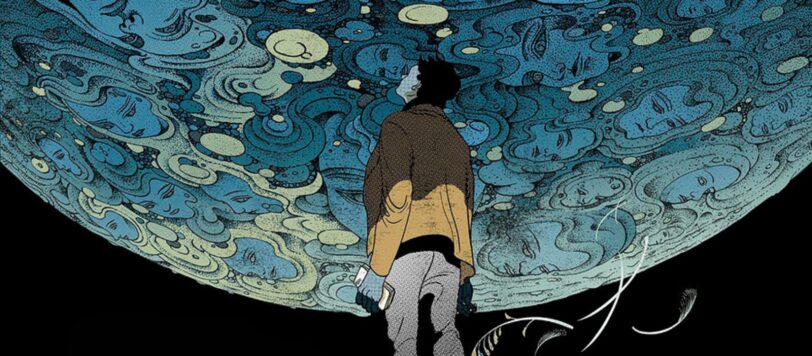
Featured image: Solaris Variant, Victo ngai, official licensed silkscreen posters commemorating Andrei Tarkovsky’s 1972 movie Solaris based on the novel by Stanisław Lem.
👉 Click here for other articles of the series Sci-fi Astronomy, edited by Camilla Pianta
