


*Sci-fi Astronomy, edited by Camilla Pianta*
Flashforward, in search of the Higgs boson💥
What if exploring the structure of matter changed the way we see the world?
COUNTDOWN TO APRIL 2026, THE CENTENARY OF SCIENCE FICTION: -7
 Clicca qui per la versione italiana di questo articolo
“Einstein’s equation said simply that matter and energy are interchangeable. If you collide particles at high enough velocities, the kinetic energy of the collision may be converted into exotic particles.
The LHC had been activated in 2006, and during its first few years of work it did proton-proton collisions, producing energies of up to fourteen trillion electron-volts.
But now it was time to move on to Phase Two, and Lloyd Simcoe and Theo Procopides had led the team designing the first experiment. In Phase Two, instead of colliding protons together, lead nuclei — each two hundred and seventeen times more massive than a proton — would be rammed into each other. The resulting collisions would produce eleven hundred and fifty trillion electron volts, comparable to the energy level in the universe only a billionth of a second after the big bang. At that energy level, Lloyd and Theo should have produced the Higgs boson, a particle that physicists had been pursuing for half a century.
Instead, they produced death and destruction on a staggering scale.”
In the novel Flashforward, Canadian writer Robert J. Sawyer imagines an experiment conducted at CERN (Conseil Européen pour la Recherche Nucléaire) which, by pushing particle physics to its utmost limits, precipitates an unforeseen and deeply unsettling event: the entire human race loses consciousness for two minutes and seventeen seconds, simultaneously experiencing a vision of its own future twenty-one years ahead.
The narrative premise stems from a real scientific context: the activation of the LHC (Large Hadron Collider), the largest particle accelerator ever built, a machine capable of reproducing energy conditions similar to those existing shortly after the Big Bang. The protagonists of the narrative, physicists Lloyd Simcoe and Theo Procopides, commence Phase Two of the experiment, which involves collisions no longer between protons but between lead nuclei — so powerful as to recreate the particles of the primordial universe. Their aim is to detect an elusive and enigmatic particle, long sought by physicists: the Higgs boson.
While the crucial experiment in the novel takes place in 2009, with LHC switched on in 2006, in reality, the LHC went into operation on September 10, 2008, with the specific purpose of detecting the long-sought “God particle”. At the time, protests from those who feared that turning on the accelerator would produce a black hole, dooming humanity and Earth to destruction, received significant media coverage, giving credence to controversial scientific hypotheses and alarmist speculation.
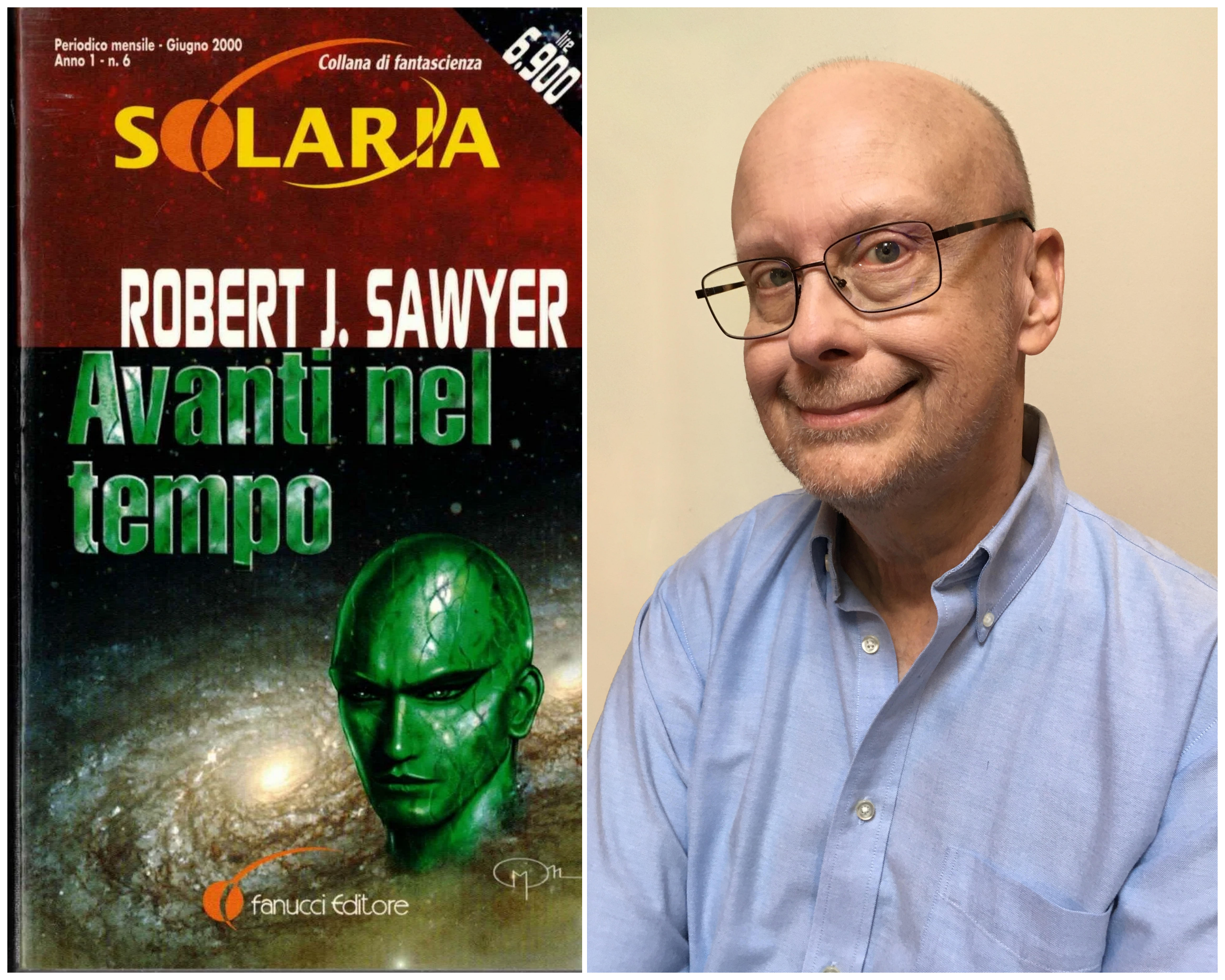
On the right, a portrait of author Robert J. Sawyer taken in 2023 by Carolyn Clink, who is also a science fiction writer and the author’s wife. Source: https://www.sfwriter.com/photos.htm
Obviously, LHC did not cause any global catastrophe; on the contrary, the research conducted with this extraordinary machine led to the actual discovery of the Higgs boson, representing one of the greatest achievements of modern physics. A thorough understanding of the significance of the Higgs boson discovery requires situating it within its theoretical context: the Standard Model of particle physics, which systematically characterizes the elementary particles constituting matter and describes the three fundamental forces—electromagnetic, weak, and strong—governing their interactions (today they are preferably called “interactions” rather than “forces,” but in this context we will use the two terms interchangeably). The weak and strong forces concern nuclear reactions, while gravity is negligible at the microscopic level.
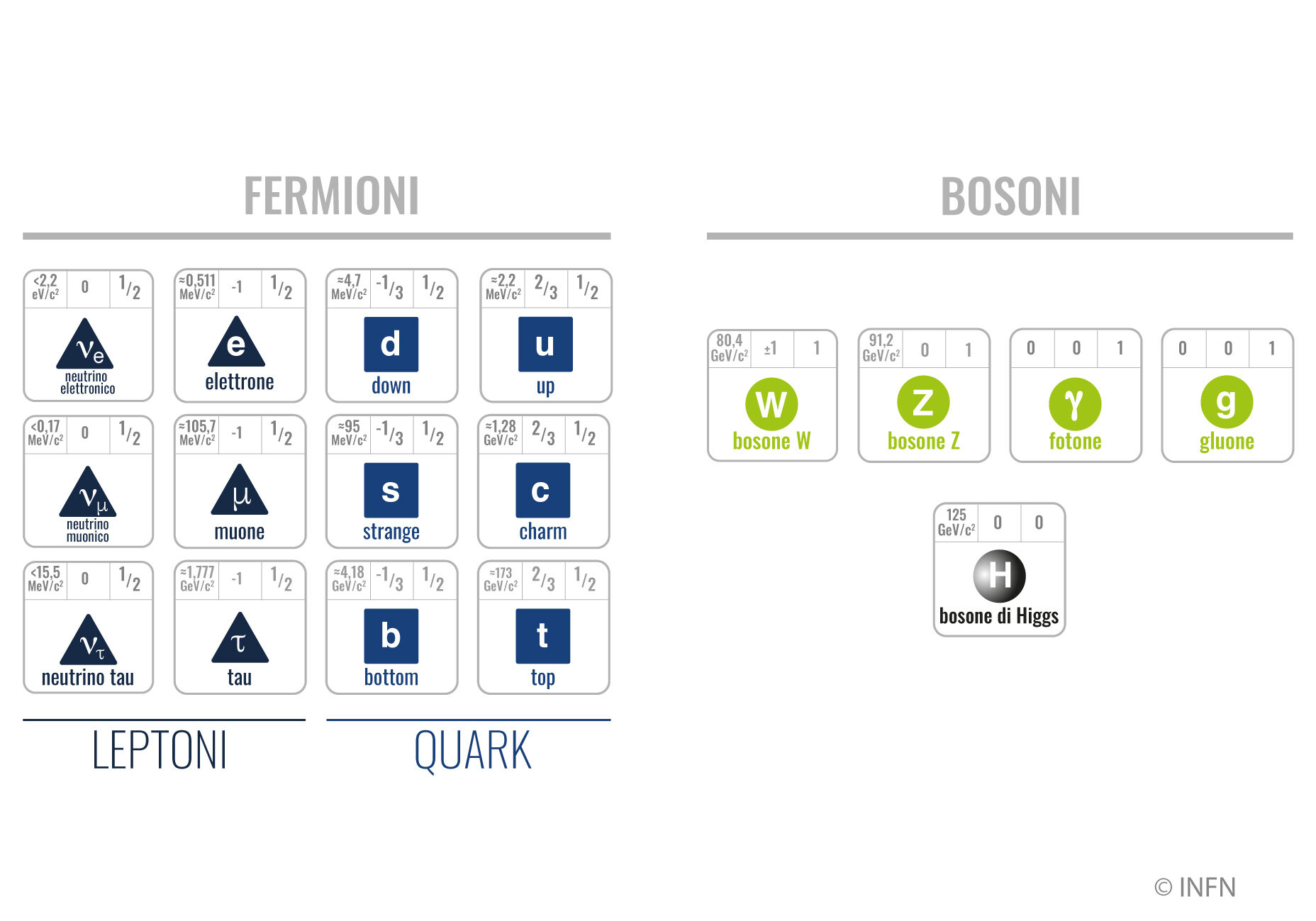
At present, the model comprises fifty-one particles, divided into two main groups: fermions and bosons.
Fermions are the fundamental components of matter and obey Dirac’s relativistic wave equation, each type possessing a corresponding antiparticle. They are classified into two categories: leptons and quarks. Leptons engage exclusively with the weak force, whereas quarks are also subject to the strong force. Consequently, while leptons are defined solely by flavour, which determines their behaviour under the weak interaction, quarks are further distinguished by colour, a property inherent to the strong interaction. In total, there are six flavours of leptons and antileptons — electron and positron, electron neutrino and antineutrino, muon and antimuon, muon neutrino and antineutrino, tau particle and antiparticle, tau neutrino and antineutrino —, and an equal number of quark–antiquark pairs — up and anti-up, down and anti-down, charm and anti-charm, strange and anti-strange, top and anti-top, bottom and anti-bottom. Moreover, quarks can assume three colours (red, green, and blue) and antiquarks three anticolours (anti-red, anti-green, and anti-blue). They are never found in isolation, being invariably confined within particles called hadrons: baryons, made of three quarks (such as protons and neutrons), and mesons, containing a quark–antiquark pair (such as pions and kaons).
Bosons, by contrast, act as mediators of the fundamental interactions between fermions and are not directly observable. Specifically, photons transmit the electromagnetic force, the massive vector bosons W +, W – and Z0 the weak nuclear force, and the eight gluons the strong nuclear force. Unlike its counterparts, the Higgs boson is a unique mediator since it does not carry any force: it emerges as a manifestation of fluctuations in the Higgs field, permeating the entire universe and endowing particles in it with mass. In other words, the Higgs boson mediates the Higgs field in the process through which mass is conferred, a mechanism activated as the universe cooled in the phases following the Big Bang. At this stage, particles begin to undergo the influence of the field, encountering a resistance analogous to that opposed by a viscous fluid. Their motion is thereby slowed, with them acquiring an inertia proportional to the magnitude of this resistance, which can be interpreted as mass. The stronger the interaction with the Higgs field, the greater the mass of the particle involved.
The search for the Higgs boson arose from a problem first identified in the early 1960s: the measurement of the masses of the W +, W – and Z0 bosons, which contradicted the hypothesis — essential for the internal consistency of the Standard Model equations — that they were massless. This discrepancy was critical, for the theory could not be deemed complete or coherent without an adequate explanation. The question of how particles acquire mass remained open until Peter Higgs — together with other researchers, including François Englert, Robert Brout, and subsequently Gerald Guralnik, Carl Hagen, and Tom Kibble — proposed the existence of the Higgs field along with its mediating particle. From that moment on, the Higgs boson became the missing piece within the Standard Model.
Attempts to detect the new particle began in the 1980s, and were performed at major accelerators like the LEP (Large Electron–Positron Collider) in Geneva and the Tevatron at Fermilab (Fermi National Accelerator Laboratory) near Chicago. Although inconclusive, these experiments allowed researchers to narrow the field of investigation, ruling out the possibility that the Higgs boson’s mass fell below 114 GeV (see the Astroglossary for the definition of electronvolt). By the late 1990s, it was evident that the expected mass window lay between 115 and 200 GeV, an energy interval that could be explored only with a new generation of accelerators. The LHC stood as the most suitable infrastructure for this purpose:within its 27-kilometre underground ring, proton beams were brought into head-on collision at energies of up to 7 TeV each, reaching velocities close to the speed of light. Such powerful impacts could therefore yield new and unstable particles, among them the Higgs boson. The difficulty originated in its exceptionally brief lifetime — less than a billionth of a billionth of a second — which rendered direct detection impossible and compelled researchers to infer its presence from its decay products. The analysis of the various decay channels was particularly complex, owing to the need for vast data volumes to isolate a genuine signal from background noise.
To meet this challenge, the ATLAS and CMS detectors were constructed at the LHC collision points, enabling the daily recording of millions of proton–proton collisions and the identification of particles issued from their decays. Independently designed, the detectors complemented each other, so that the observation of the same signal in both could be taken as actual evidence rather than a statistical fluctuation or an instrumental artefact. A stringent validation criterion was therefore established: the discovery would be confirmed only if the observed signal exceeded a threshold of five standard deviations, a confidence level that reduced the probability of a chance occurrence to less than one in three million.
The search thus evolved as a prolonged operation of data collection and analysis. By 2011, initial assessments revealed a slight surplus of events in the two-photon decay channels — an encouraging sign, yet not sufficient to be regarded as empirical evidence. In the months that followed, the accumulation of analysed collisions and the independent cross-checking of signals by ATLAS and CMS enhanced the statistical certainty of the result. The intensive research effort culminated on 4 July 2012, when the discovery of a new particle exhibiting the properties predicted for the Higgs boson was simultaneously announced by the ATLAS and CMS teams. The following year, Peter Higgs and François Englert received the Nobel Prize in Physics for theorizing the mechanism at the origin of the mass of subatomic particles.
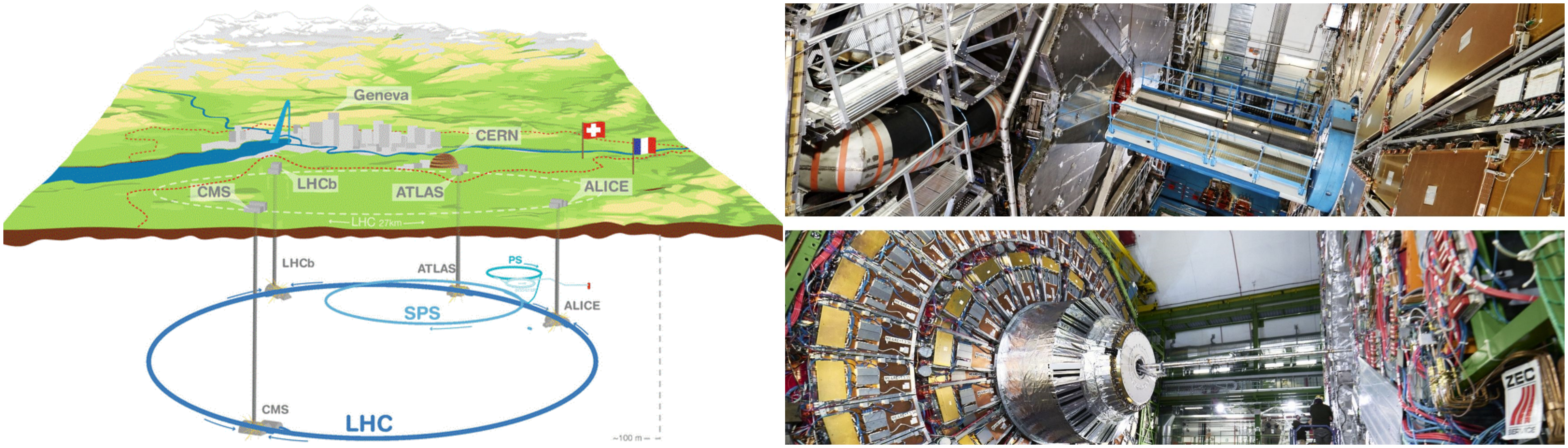
Right: The complex ATLAS (top) and CMS (bottom) detectors. Credit: CERN. Source: https://atlas.cern/Updates/News/ATLAS-CMS-Higgs-2022
Through experiments at the LHC, physicists are able to study the Higgs boson and thereby reconstruct the mechanism by which the Higgs field imparted mass to particles in the early universe. The value of this field parameter is pivotal, because it dictates the rate at which matter coalesced into structures such as stars and galaxies. It is precisely this interplay between subatomic physics and cosmology that shapes the narrative framework of Sawyer’s novel, which examines how the effects of high-energy collisions at the microscopic scale might extend into the macroscopic realm. In scientific reality, however, there is no risk of such an apocalyptic scenario occurring: CERN’s work is focused on testing the validity of the Standard Model and elucidating the role of the Higgs mechanism in the evolution of the universe, without any possibility of large-scale catastrophic consequences. The energies involved in particle accelerators are, in fact, negligible compared with those associated with astrophysical phenomena, such as cosmic rays, which have been bombarding the Earth for billions of years. Overall, there is no threat to the survival or stability of the universe — only a confident look forward in time, toward a deeper understanding of its ultimate fate.
Nus, 3 September 2025 – English version published on 18 May 2026
Astroglossary
eV: elettronvolt, unit of measure of the energy, typically adopted in particle physics
GeV: gigaelettronvolt, that is 109 eV
TeV: teraelettronvolt, that is 1012 eV
deviazione standard (σ): statistical measure of data dispersion that quantifies how far individual values deviate from the arithmetic mean
References
Robert J. Sawyer, Avanti nel tempo, translated by Maurizio Nati, Solaria n. 6, Fanucci Editore, 2000, in Italian
Internet Speculative Fiction Database: Robert J. Sawyer, FlashForward, every edition
The section dedicated to the novel FlashForward on author Robert J. Sawyer’s official website
Robert Mann, An Introduction to Particle Physics and the Standard Model, Taylor & Francis, 2009, open access online, free download of the pdf file
CERN, CERN70: Announcing the Higgs Boson Discovery, 2024
NobelPrize.org, The Nobel Prize in Physics 2013
CERN, Will CERN generate a black hole?, page archived after its publication in 2011
👉 Click here for other articles of the series Sci-fi Astronomy, edited by Camilla Pianta
