


*Sci-fi Astronomy, edited by Camilla Pianta*
Skyfall, a story of space debris 🛰️
What if the threat from above was our own making?
COUNTDOWN TO APRIL 2026, THE CENTENARY OF SCIENCE FICTION: -9
 Clicca qui per la versione italiana di questo articolo
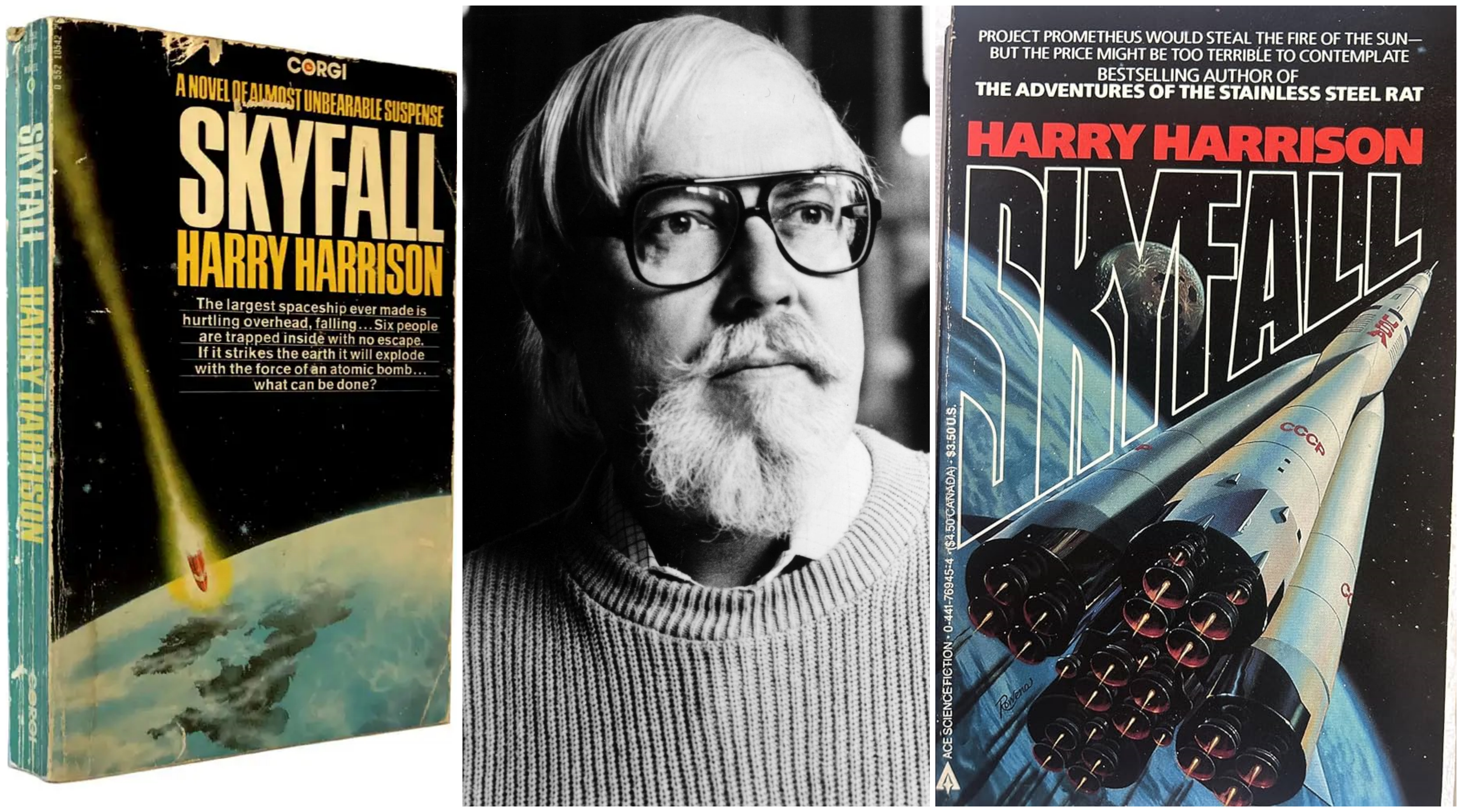
“Prometheus is the largest spacecraft ever built by man. A joint USA-USSR project, the gigantic ship weighs over 20,000 tons–and may be the ultimate solution to the world’s energy needs. Like its mythical namesake, who stole fire from the gods and gave it to mankind, Prometheus will capture the energy of the sun and beam it to Earth–unless something goes terribly wrong.
An unforseen accident has stranded Prometheus in a decaying orbit less than a hundred miles above the Earth. Its small, international crew of men and women have a day, maybe less, before they come crashing down with their ship. But there’s more at stake than a few astronauts’ lives. Prometheus is too immense to burn up in reentry. When it hits, history’s greatest endeavor will become the world’s biggest bomb.”
With impressive foresight, the American author Harry Harrison described in his novel Skyfall — first published in 1976 by Faber & Faber for the British market — an event that would occur only three years later: the uncontrolled re-entry of the space station Skylab, launched by NASA in May 1973. Because of a combination of technical anomalies never fully resolved, including the deterioration of the thermal regulation system and the absence of a permanent propulsion module, the station was abandoned to its fate. In the years following the final mission, which ended in February 1974, Skylab remained in orbit as an inert body. An unusual intensification of solar activity in the late 1970s unexpectedly altered the conditions of the upper layers of the atmosphere, causing Skylab to lose altitude at an increasingly rapid pace.
On 11 July 1979, after months of uncertain calculations and futile attempts to find solutions, the world watched with apprehension as the giant satellite made its chaotic re-entry — just like the Prometheus in Skyfall. The impact came down over the Indian Ocean and parts of rural Western Australia, where metallic fragments fell scattered across hundreds of square kilometres. No injuries were reported; nonetheless, the event carried profound implications. For the first time, a space station of enormous proportions, the product of the highest level of U.S. engineering innovation, crashed back to Earth with the risk of causing damage to people and infrastructure. The incident sparked intense media interest and initiated an international debate on end-of-life satellite management, civil liability for potential accidents, and the sustainability of the orbital environment. The narrative of a race against time to avert a global catastrophe at the heart of Harrison’s novel thus mirrored the real tension experienced in 1979, bringing to light a problem that had until then been largely underestimated: space debris.
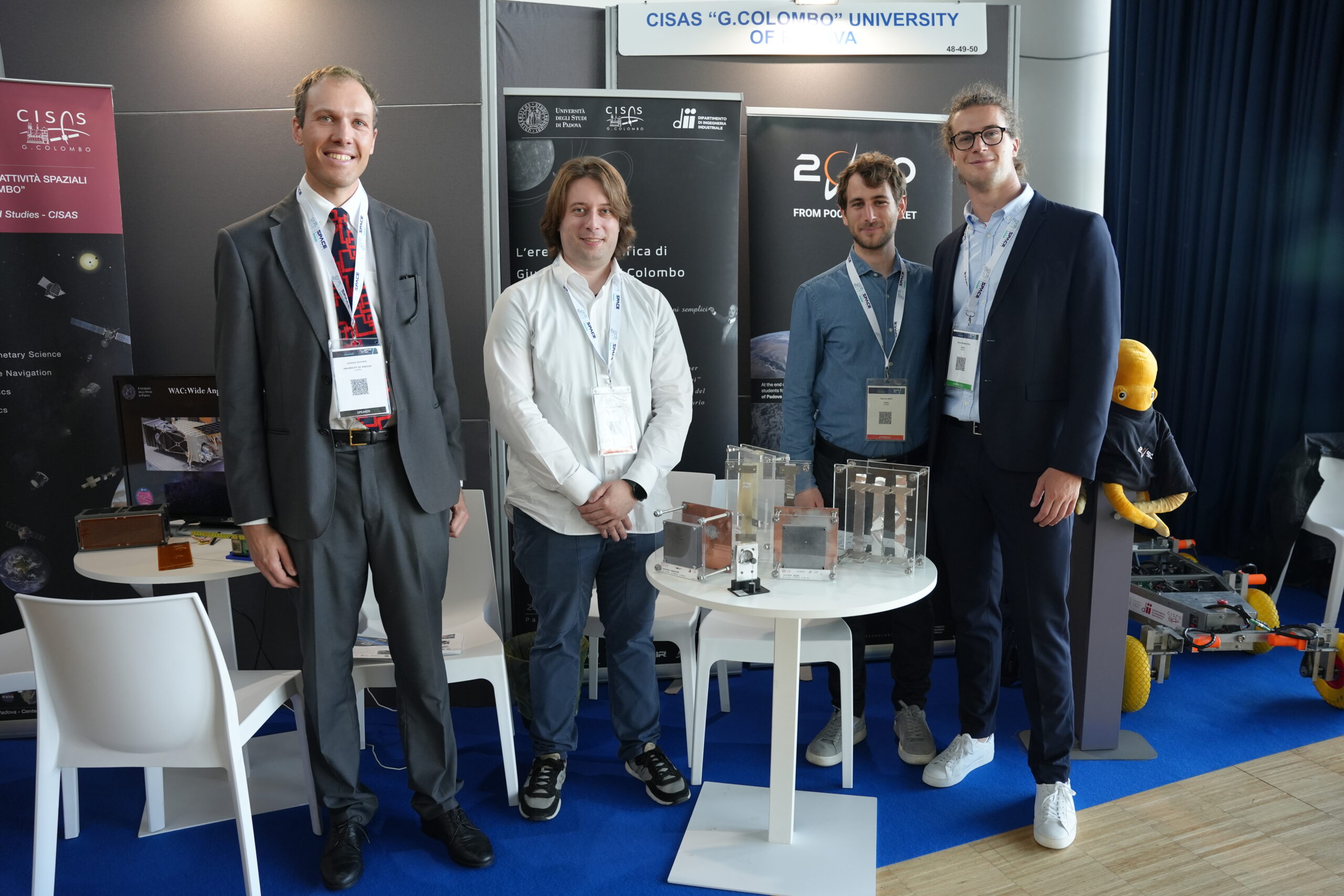
Forty-six years after the Skylab incident, the threat has not disappeared. On the contrary, Earth’s orbits have become crowded with thousands of defunct objects and fragments of various sizes. Helping us to better understand the dangers and the measures that science and technology are deploying to address them are Lorenzo Olivieri, Stefano Lopresti, and Nicolò Trabacchin, who are, respectively, a postdoctoral researcher and doctoral students at the Department of Industrial Engineering (DII) and the University Centre for Space Studies and Activities (CISAS) “Giuseppe Colombo” at the University of Padua. Led by Professor Alessandro Francesconi and funded by the Italian Space Agency (ASI), the research group has been working on space debris for about twenty years and currently consists of ten members, positioning itself among the most active teams in Europe in experimental analysis and theoretical modelling of orbital fragmentation.
“The issue of space debris has become one of the most concrete emergencies for the safety of orbits and, consequently, for the Earth itself,” explains Dr Olivieri. “In recent decades, the debris population has grown at an alarming rate due to both spontaneous and induced fragmentations. Among the latter, resulting from demonstrations of anti-satellite weapons, we recall in particular the well-known Chinese FY-1C test of 2007, which even has its own Wikipedia entry.” According to the most recent data, updated to May 2025, since the beginning of the space age in 1957 more than 21,600 satellites have been placed in Earth orbit, of which 11,700 are still operational. Added to these are fragmentation debris, for a total of approximately 41,910 cataloged objects. Including statistical estimates of unidentified debris, it is estimated that there are about 54,000 objects larger than 10 cm, 1.2 million between 1 and 10 cm, and 140 million smaller than 1 cm. “While fragments larger than 10 cm can be easily tracked from the ground using dedicated optical and radio telescopes,” continues Olivieri, “those smaller than 1 cm are completely invisible to our instruments. This is why they pose the greatest threat: if they were to collide with a satellite, they would release energy comparable to that of a hand grenade, causing irreparable loss of functionality in multiple components.”
At present, space debris are concentrated mainly in Low Earth Orbit (LEO) and Geostationary Earth Orbit (GEO). “To prevent this trend from spreading elsewhere,” notes Trabacchin, “we are focusing on monitoring cislunar orbits, which extend from GEO to the Moon. This is a very difficult environment to observe directly due to several factors: artificial light pollution, lunar light reflection, and the complex pointing geometry of telescopes relative to the Sun. Extremely favourable conditions would therefore be required to identify debris at such altitudes — between 30,000 and 60,000 km — without interference. One possible solution could be the creation of a constellation of satellites orbiting the Moon, which would largely remove the obstacles to Earth-based detection.”
Nevertheless, locating space debris is not sufficient to effectively take control of the situation: it is also necessary to understand how debris interact with satellites and what secondary fragments may be generated during an impact. Lopresti elaborates: “The main tool we have for experimentally replicating catastrophic events in orbit is the Light-Gas Gun (LGG), a two-stage accelerator of small objects — such as metallic spheres and cylinders — that act as projectiles. Their small size makes them suitable for simulating space collisions, which typically manifest at very high velocities: for example, a particle about 1 mm in diameter travelling at around 10 km/s would possess kinetic energy sufficient to be destructive. Hydrodynamic effects, such as melting or vaporisation of the impacted material, are common under these circumstances, although they are challenging for computational modelling. Since advanced numerical simulations used to exhaustively describe impact dynamics are extremely time-consuming, we sought a more practical long-term solution: this is how our Collision Simulation Tool Solver (CSTS) was developed.” The CSTS is a software— technically a semi-empirical, parametric code — specifically designed by the Padua research group to produce reliable statistical models. Starting from basic mathematical equations, experimental data from LGG tests are progressively incorporated in order to account for the wide variety of materials employed in satellite construction (from simple ones such as aluminum to more innovative ones such as carbon fibres), possible geometric configurations, and the range of velocities involved. “The constant enrichment of information is essential to improve the predictive performance of the CSTS and make it an up-to-date, competitive, and cutting-edge simulation platform from a theoretical standpoint,” Lopresti asserts.
The Padua group is also at the forefront of awareness-raising and prevention efforts. “In this regard, it is important to distinguish between the legislative and operational levels,” emphasises Dr Olivieri. On the legislative aspect, several international organisations publish non-binding guidelines to ensure orbital safety. One of these is the Inter-Agency Space Debris Coordination Committee (IADC), which brings together delegates from major space agencies worldwide (e.g., ESA, NASA, JAXA) to coordinate exchanges, research, and programs against debris proliferation. In parallel, the United Nations Office for Outer Space Affairs (UNOOSA), in collaboration with the Committee on the Peaceful Uses of Outer Space (COPUOS), formalises the agreements reached by the IADC at the legal level. ESA, meanwhile, acts through the approval of a tightening set of directives for future space missions. It has in fact endorsed the Zero Debris Charter, a document symbolising the voluntary commitment of member states to generate no new debris from 2030 onward and laying the foundations for a transition toward a cleaner orbital ecosystem, to be treated with the same responsibility demanded by terrestrial sustainability policies. In this sense, ESA now imposes much stricter decommissioning standards than in the past, with the stated objective of achieving a net-zero contribution to the space debris population. This entails that satellites at the end of their operational life must be removed promptly and may not remain for more than five years in so-called graveyard orbits — stable, sparsely populated regions of space around Earth where satellites are placed once decommissioned. Finally, individual nations must adopt these guidelines through their own regulations, implementing measures for monitoring and mitigating the risks associated with the satellites they launch.

On the operational front, aerospace engineers must ensure that satellites can perform their function without harming the orbital environment; implementing protective shielding capable of withstanding collisions and establishing effective removal strategies in advance are therefore essential to the success of any mission. Uncontrolled re-entries are now largely a legacy of the past, dating back to times when spacecraft removal was not yet common practice. In such cases, agencies and surveillance centres would cooperate to monitor debris trajectories in real time and determine their atmospheric entry points as accurately as possible. It is fortunate that, thanks to the planet’s extensive ocean coverage, most such occurrences take place over the sea, unlike the Skylab incident.
“Among the most important measures drafted by the IADC,” specifies Trabacchin, “is the requirement to verify the absence of residual propellant in tanks, because pressurised liquids — together with components such as batteries — can explode in orbit even years after mission completion. To overcome this impasse, work is underway on alternative technologies that eliminate the consumption of fuel. A prime example is provided by so-called tethers: long conductive wires that exploit interaction with Earth’s magnetic field to gradually slow down a satellite and steer it toward atmospheric re-entry. If we wanted to adopt an evocative term, we could call them green technologies.”
Space agencies tackle the sustainability challenge along at least three distinct but complementary directions: defining general rules to limit debris multiplication, choosing eco-compatible materials and technologies already at the design stage, and promoting a policy of respect for the space environment, conceived as an extension of the mindset established here on Earth. Yet, despite scientific and institutional efforts, the gap between agency intentions and the logic governing much of the space industry remains evident. “The majority of satellites currently in orbit are owned by private companies, often driven more by the desire for immediate economic return than by long-term profitability criteria. Investing today in prevention means containing tomorrow’s technical, logistical, and ethical costs: this is the message that the academic world is trying to convey,” Dr Olivieri concludes.
Adherence to shared guidelines, contributing to their simplification so that they become universally recognised, and participation in international meetings are fundamental steps toward building a more solid and inclusive space governance framework. Only shared awareness can reduce the number of irreversible events — such as the one outlined in Skyfall — and orient future decisions in pursuit of genuine sustainability.
Nus, 2 July 2025 – English version published on 18 May 2026
Astroglossary
mm: millimetre
cm: centimetre
km: kilometre
km²: square kilometre
km/s: kilometre per second
References
Internet Speculative Fiction Database: Harry Harrison, Skyfall, every edition
45 Years Ago: Skylab Reenters Earth’s Atmosphere, 2024
European Space Agency – Space Safety: Space debris by the numbers
European Space Agency – Space Safety: The Zero Debris Charter
Wikipedia: 2007 Chinese anti-satellite missile test (FY-1C)
Centro d’Ateneo di Studi ed Attività Spaziali (CISAS) “Giuseppe Colombo” dell’Università degli Studi di Padova, English version available
Dipartimento di Ingegneria Industriale (DII) dell’Università degli Studi di Padova, English version available
Scientific publications by the Space Debris Group (SDG)
Agenzia Spaziale Italiana (ASI), English version available
Japan Aerospace Exploration Agency (JAXA)
Inter-Agency Space Debris Coordination Committee (IADC)
The Committee on the Peaceful Uses of Outer Space (COPUOS)
Conferenze internazionali sulla sostenibilità spaziale cui il gruppo di ricerca ha recentemente preso parte
2ⁿᵈ International Orbital Debris Conference (IOC II), Sugar Land, Texas (USA), December 2023
17ᵗʰ Hypervelocity Impact Symposium (HVIS), Tsukuba (Giappone), September 2024
Space Debris & Sustainability Conference, Hong Kong (Cina), December 2024
IADC Annual Meeting, Bonn (Germania), April 2025
9ᵗʰ European Conference on Space Debris, Bonn (Germania), April 2025
Space Meetings Veneto, Venezia (Italia), May 2025
👉 Click here for other articles of the series Sci-fi Astronomy, edited by Camilla Pianta
